
How to Choose the Right Livestock Medical Syringe in 2026?

Choosing the right Livestock Medical Syringe in 2026 requires more than comparing prices or package sizes. A syringe must match the animal, medicine, dosage, injection route, and handling environment. A small dairy calf needs different equipment from a mature beef cow. The same applies to sheep, goats, pigs, and poultry.

Field experience shows that simple details often affect treatment quality. A clear barrel helps confirm the dose. A smooth plunger supports controlled delivery. A secure needle connection reduces leaks during busy farm work. Appropriate needle length and gauge also matter, especially when skin thickness and medication viscosity vary. Small choices matter.

This guide will examine syringe types, volume accuracy, needle compatibility, reusable and disposable designs, cleaning practices, storage, and supplier reliability. It will also discuss animal welfare and practical infection-control habits. Veterinary guidance and current product instructions should support every decision. Product claims deserve careful checking. Marketing language is not clinical evidence.

There is no perfect syringe for every farm. A cheaper model may feel practical, yet poor markings can create dosing uncertainty. A premium design may offer comfort, but it may not suit every routine. This is where careful comparison becomes necessary. Users should observe real handling conditions, record recurring problems, and revise their choices when evidence changes. Even experienced teams can overlook small weaknesses. Reliable equipment supports safer care, better records, and more consistent livestock health outcomes.
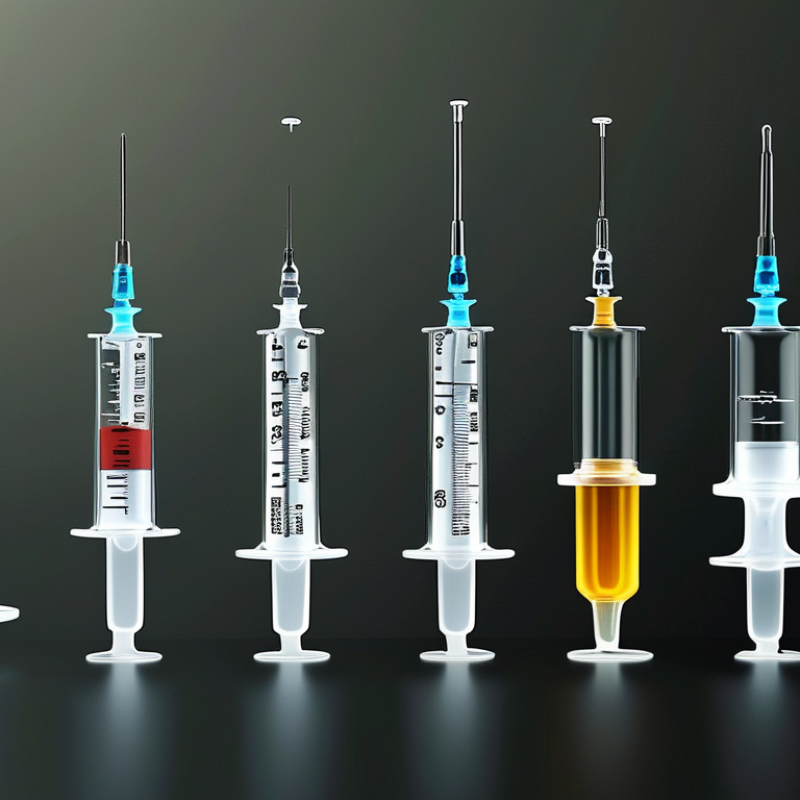
How to Choose the Right Livestock Medical Syringe in 2026?

Define Livestock Medical Syringe Types and Their Uses

Livestock medical syringes are designed for different animals, medicines, and treatment routines. The basic disposable syringe suits single-use injections, especially when hygiene and quick replacement matter. Reusable syringes, often made with durable metal or glass parts, can support repeated farm work when cleaned and sterilized correctly. Fit matters.

Automatic syringes deliver repeated doses with less hand movement. They are useful during vaccination, herd treatment, or other routine procedures involving many animals. Adjustable-dose syringes help when animals vary in size, but their settings must be checked before every session. A small dosing error can affect treatment quality. Needle selection also matters because cattle, sheep, pigs, and poultry have different skin thicknesses and injection requirements.

In practical livestock care, I would match the syringe to the medicine label, animal size, injection route, and expected treatment volume. A short, clear barrel improves visibility when measuring small doses. A comfortable grip reduces hand fatigue during long work. For thick medications, a stronger mechanism may perform better than a lightweight model. Automatic devices can save time, yet they are not always easier to control. I have seen users trust the setting without checking the actual output. That habit deserves reconsideration. Clean handling, routine calibration, and accurate records support safer and more reliable treatment decisions.


How to Choose the Right Livestock Medical Syringe in 2026?

Livestock medical syringes are selected according to dose volume, delivery route, and dosing frequency. The chart shows typical working-volume ranges for common syringe types.

How to use this chart: Choose a syringe whose capacity closely matches the prescribed dose for better measurement accuracy. Insulin and tuberculin syringes suit small, precise doses; standard disposable syringes cover routine injections; automatic syringes support repeated dosing; and drench guns are designed for larger oral doses.

Match Syringe Capacity and Needle Size to the Treatment

How to Choose the Right Livestock Medical Syringe in 2026?

Match Syringe Capacity and Needle Size to the Treatment

Selecting a livestock syringe starts with the prescribed dose, not the animal’s size alone. Choose a capacity that keeps the dose near the middle of its measurement scale. A 3 ml syringe usually gives better control for small doses than a 20 ml model. Large syringes can waste medication through inaccurate readings. Tiny differences matter.

Needle size must match the treatment route, animal, and medication thickness. A higher gauge means a thinner needle, while a lower gauge means a wider one. Subcutaneous injections often use shorter, finer needles when the veterinarian approves them. Intramuscular treatments may require greater length and careful placement. Thick solutions may need a wider needle, but increasing size is not automatically safer. Follow the veterinary directions.

On a working farm, clean handling is as important as capacity. Check the printed graduations, inspect the needle package, and replace damaged equipment. Keep the syringe steady against the animal’s skin. Do not force a blocked needle. That can bend the tip or cause an inaccurate dose. Recheck the species, route, volume, and withdrawal instructions before treatment. A practical mistake is choosing one syringe for every job. Convenience feels efficient, yet it can reduce accuracy. When the dose seems difficult to measure, pause and ask a veterinarian or qualified animal health professional.

Evaluate Materials, Accuracy, Safety, and Animal Comfort

Choosing the right livestock medical syringe starts with material quality. Stainless steel needles resist bending and repeated cleaning better than low-grade alloys. Polypropylene barrels are light, transparent, and easier to inspect for cracks. In field checks, I look for smooth plungers and clear graduations. Small defects matter.

Accuracy deserves a hard number. ISO 7886-1:2017 allows volume tolerances of roughly ±4% to ±5%, depending on syringe capacity. A 2 ml dose can therefore lose meaningful precision when the syringe is poorly calibrated. Select the smallest practical barrel for the prescribed volume. Verify calibration before busy treatment periods. It takes seconds.

The WOAH Terrestrial Animal Health Code also emphasizes competent handling, hygiene, and minimizing pain during veterinary procedures. A blunt needle, excessive pressure, or repeated skin punctures can increase stress and tissue damage.

Safety includes more than avoiding accidental sticks. Choose a secure needle connection, a readable barrel, and a design that supports one-handed control. Needle length and gauge should match the species, injection site, and medication. Larger animals do not automatically require larger needles. That assumption deserves review.

FAO’s 2023 agrifood emissions report links livestock production with significant resource pressure, making careful dosing and reduced waste increasingly important. Keep syringes clean, dry, and separated by treatment use. No syringe is perfect. Observe the animal’s movement, skin reaction, and recovery, then adjust your selection.

Choose Between Disposable and Reusable Syringe Designs

How to Choose the Right Livestock Medical Syringe in 2026?

Choose Between Disposable and Reusable Syringe Designs

Disposable syringes suit fast-moving farms and routine vaccination days. Each unit arrives sterile, reducing cleaning errors and cross-contamination between animals. The World Health Organization emphasizes safe injection practices as a core infection-control measure. That principle matters when several hundred animals share one handling area. Disposable models also reduce setup time. Less washing. Less guesswork.

Reusable syringes can make economic sense for frequent treatments, especially on large farms with trained staff. They often offer stronger bodies, adjustable dosing, and lower waste over repeated use. However, their value depends on disciplined cleaning, drying, inspection, and calibration. A worn plunger can quietly deliver the wrong dose. That is not a small mistake. The 2024 Grand View Research veterinary healthcare report estimated the global veterinary healthcare market at about 39.3 billion US dollars in 2023, reflecting growing demand for dependable clinical equipment. Market growth does not guarantee correct field use.

FAO reports that livestock represents about 40% of global agricultural output value. Syringe selection therefore affects both animal welfare and production efficiency. Choose disposable designs when sterility, speed, or disease-control pressure dominates. Choose reusable designs when staff can verify sanitation and dose accuracy every time. I would not assume reusable always saves money. Replacement parts, labor, and failed treatments can change the calculation. Follow veterinary instructions and the medicine label, not convenience.

How to Choose the Right Livestock Medical Syringe in 2026? — Choose Between Disposable and Reusable Syringe Designs
Decision Dimension Disposable Syringe Design Reusable Syringe Design
Best-Fit Applications Individual injections, outbreak-control protocols, mobile work, and situations where rapid turnover is important. High-volume routine vaccination, fixed-facility work, and operations equipped for validated cleaning and sterilization.
Typical Barrel Volumes Commonly available in 1, 2, 3, 5, 10, 20, 30, and 50–60 mL sizes. Select the smallest practical volume for accurate dosing. Commonly available in 5, 10, 20, 30, and 50 mL sizes. Automatic or multi-dose models may use larger reservoirs.
Dose Accuracy Generally consistent when the barrel is undamaged and the graduation matches the dose. Small-volume syringes are usually preferable for small doses. Can provide consistent dosing over many uses, but accuracy may decline if the plunger, O-ring, barrel, or adjustment mechanism becomes worn.
Needle Compatibility Available with fixed or detachable needles. Common livestock needle sizes span approximately 14–25 gauge, depending on species, route, product, and viscosity. Usually supports detachable needles and may permit rapid needle changes. Needle selection must still follow the veterinary product label and approved route.
Sterility at Point of Use Not automatically sterile after storage. Sterility depends on effective cleaning, disinfection or sterilization, drying, and protected storage.
Cross-Contamination Risk Higher risk if cleaning is incomplete or the same needle is used between animals. Follow veterinary infection-control procedures.
Preparation Time Requires collection, cleaning, inspection, sterilization or disinfection as appropriate, drying, lubrication when specified, and functional checks.
Durability Designed for single use. Plastic barrels can crack, deform, or lose graduation clarity if exposed to heat, chemicals, or rough handling. Designed for repeated use, but seals, springs, valves, barrels, and adjustment parts are wear components that require inspection and replacement.
Waste Profile Generates more clinical waste. Used needles must be placed immediately in an approved puncture-resistant sharps container.
Cleaning and Maintenance Normally not cleaned for reuse. Discard after the approved use and dispose of it according to local sharps and medical-waste requirements. Requires documented cleaning and maintenance. Inspect for residue, leaks, inaccurate dosing, damaged seals, blocked needles, and stiff movement.
Temperature and Storage Store sealed units in a clean, dry area and protect them from excessive heat, moisture, sunlight, and package damage. Store clean and completely dry. Avoid heat and chemicals that can damage plastic, rubber seals, springs, or calibration components.
Operational Cost Pattern Higher recurring purchase and disposal cost, but lower labor and equipment requirements for cleaning and sterilization. Higher initial equipment and maintenance requirements, with potentially lower recurring syringe consumption when properly maintained and used at high volume.
Animal-Welfare Considerations Repeated use of a needle can dull the point and increase tissue damage or contamination risk. Replace needles according to veterinary protocol.
Regulatory and Product Compatibility Confirm that the syringe material, volume markings, needle, and route are compatible with the veterinary medicinal product label. Confirm compatibility with the product, cleaning process, sterilization method, and any dosing-calibration requirements before use.
Practical Choice in 2026
Selection should be based on the animal species, injection route, prescribed dose, product viscosity, required sterility, staff capability, local waste rules, and the veterinary product label. Needle gauge, length, and syringe volume must be confirmed by a veterinarian or qualified animal-health professional.

Check Cleaning, Storage, Compatibility, and Regulatory Needs

How to Choose the Right Livestock Medical Syringe in 2026?

Cleaning and storage should influence your choice as much as dose accuracy. A syringe with smooth surfaces and a removable plunger is easier to wash thoroughly. After use, rinse away medicine before residue dries inside the barrel. Use the cleaning method permitted by the syringe material and veterinary instructions. Then let every part dry fully. Moisture invites contamination. Store syringes in a closed, clean cabinet, away from dust, sunlight, chemicals, and temperature extremes. Keep needles capped only when the procedure and local guidance allow it.

Compatibility requires careful checking. Confirm the syringe volume, connector, seal material, and needle fit the intended veterinary medicine. Some formulations can damage rubber seals or reduce dose accuracy. Check the label and product instructions, not only the syringe appearance. A 20 mL syringe may suit a large animal, yet poor graduation marks can still cause dosing errors. Test the plunger movement before use. It should move steadily, without sticking or leaking. Small details matter.

Regulatory needs vary by location and animal purpose. Select equipment supplied with clear instructions, traceability information, and appropriate quality documentation. Record lot details when treatment records require them. Never reuse single-use equipment. Reusable models need a documented cleaning and inspection routine. I once treated storage as an afterthought; that was a poor assumption. Clean equipment can still fail after heat exposure, rough handling, or an overlooked crack. Ask a veterinarian or qualified supplier when the medicine, species, or local rules create uncertainty.

AVADA IT

Fusce ut ipsum tincidunt, porta nisl sollicitudin, vulputate nunc. Cras commodo leo ac nunc convallis ets efficitur.

RECENT TWEETS

CONTACT US

  • 12345 North Main Street,
    New York, NY 555555

  • 1.800.555.6789

  • sale@vibrotools.com

Go to Top